
There is something deeply comforting about data.
Numbers behave. Charts stay in their lanes. Reports have structure, headings, conclusions. Data does not cry in the middle of a sentence. Data does not call you at 2AM. Data does not bury its sister and maybe that’s the problem.

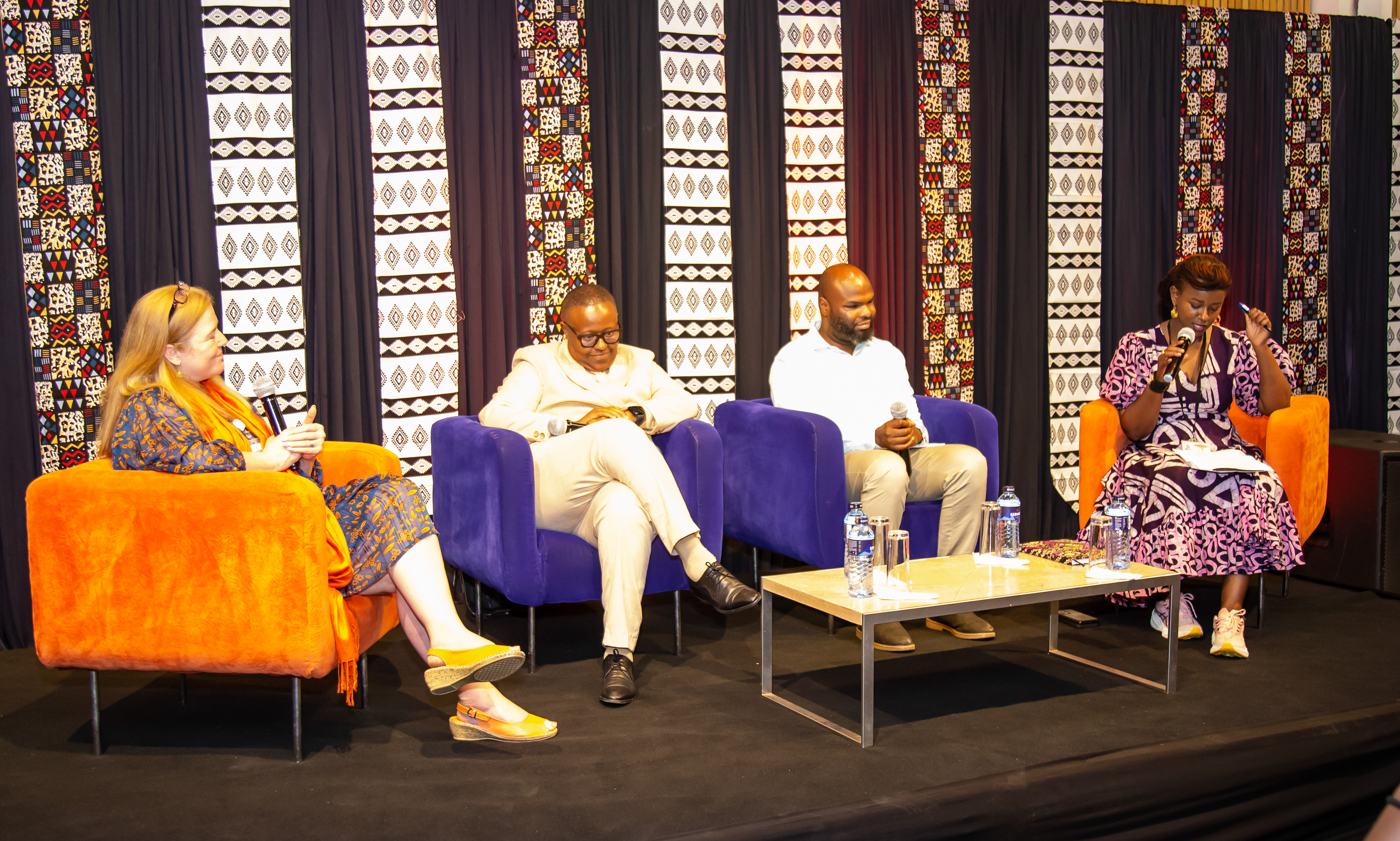
Panel discussion at British Council, Nairobi.
On March 19th, 2026, I had the privilege of sitting alongside representatives from Manchester University and the Society of the Blind.

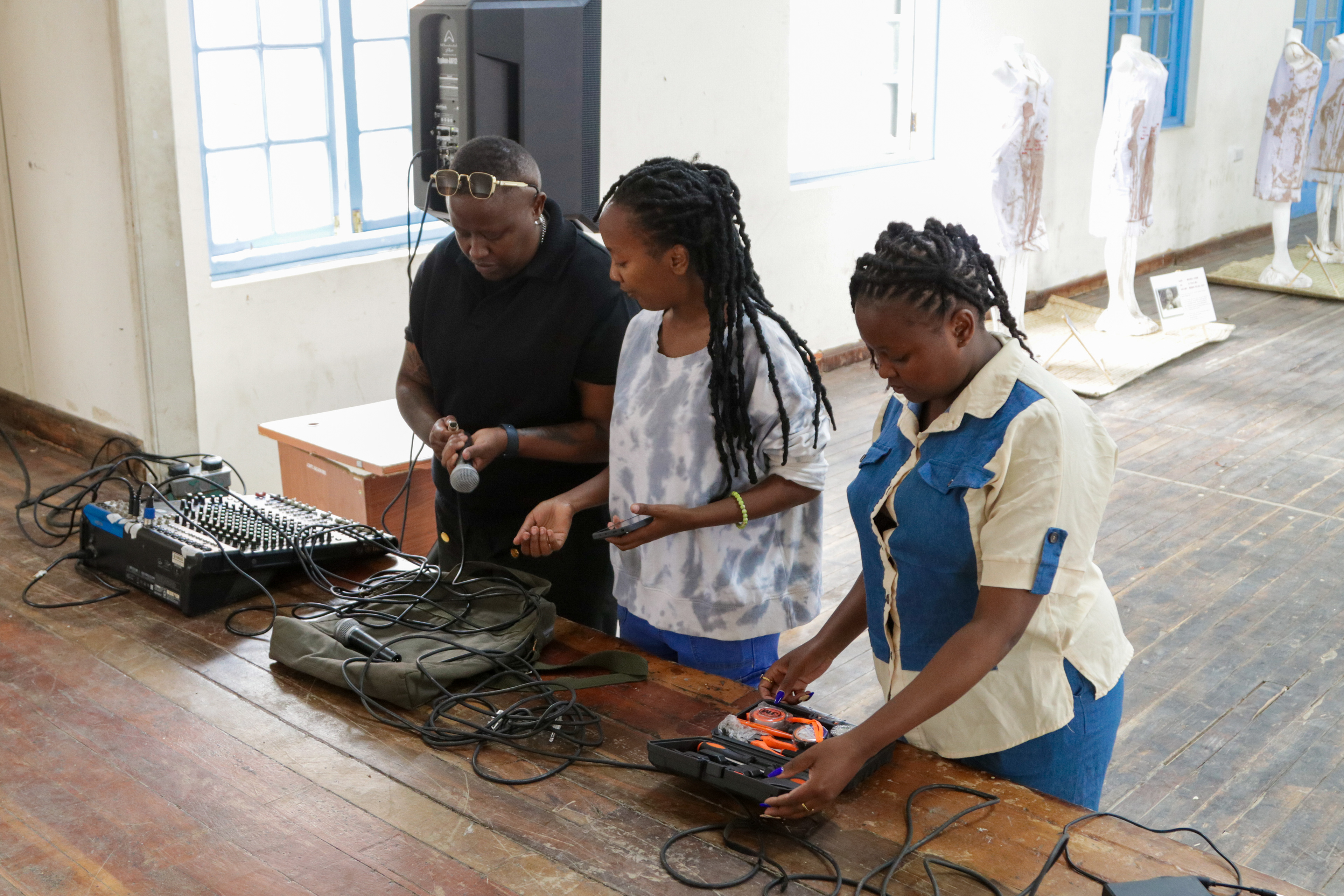
Maskan Installation I curated in 2025
In many of our contexts, especially when we talk about gender justice, data is not just information.
It is evidence of pain. We Have the Data. So Why Don’t We Have Justice? We are not lacking in information. We have statistics on Gender-Based Violence. We have case numbers. We have timelines.
We have reports that are beautifully designed, donor-approved, and neatly printed.



Cases stall. Families follow up on their own. Survivors navigate systems that were never built to hold them.
So the question I brought into the room was simple: If data is so powerful, why is it not moving systems?
Why does it sit in reports instead of sitting in courtrooms, in policy rooms, in decision-making spaces where it can actually disrupt something? Why does it inform… but not transform?
The Lie of Neutral Data We often talk about data like it is neutral.
Objective. Clean. Unbiased. But data, especially in our context, is deeply political.
It reflects:
What we choose to count
What we choose to ignore
Who gets documented
Who gets erased

Sometimes, the violence is not just in the act itself. It is in the absence of data.
In the misrepresentation of it. In the way it gets flattened into numbers that strip away humanity. A woman becomes “Case #27.” A life becomes a statistic. A story becomes a footnote.
In the misrepresentation of it. In the way it gets flattened into numbers that strip away humanity. A woman becomes “Case #27.” A life becomes a statistic. A story becomes a footnote.
We wonder why people disengage. From Passive Information to Active Accountability The “Systems of Justice” approach we explored in this exchange pushed one core idea: Data should not just inform. It should demand. Demand accountability. Demand response. Demand follow-through.




Report on Femicide Creatives Garage and Usikimye collaborated on in 2025
Injustice is loud, violent, and relentless. So how do we make data louder? MASKAN: When Data Refuses to Be Quiet This is where my work with MASKAN comes in. MASKAN is a confrontation. An immersive, multi-sensory installation that forces you to sit inside the reality of femicide in Kenya.
You walk into a white space. Too clean. Too quiet.
Almost peaceful, only that it’s not peace. It’s absence.
Almost peaceful, only that it’s not peace. It’s absence.
The kind of absence that comes when names are forgotten, when systems fail, when violence is normalized and then quietly archived. Until the rupture happens . Blood against white. Not decorative. Not metaphorical.
A refusal. A refusal to let these stories remain abstract. A refusal to let you leave untouched.
Once you feel something in your body, once it unsettles you, once it disrupts your comfort...you cannot go back to treating it as just data.

Maskan Exhibition in 2026





Awareness is Not Action. We have mastered awareness. We trend. We post. We gather in rooms like this one.
We say the right things and then we move on.
We say the right things and then we move on.
There’s a line I shared during the session: “We only get angry for 30 seconds before we move to the next news article.” it’s true and terrifying because awareness without action is just performance.
It makes us feel like we’ve done something. When in reality, nothing has moved. No case has progressed. No system has shifted. No one has been held accountable. So What Moves People?
If data alone is not enough, then what is? At the intersection of my work, I’ve found this: Tech gives us scale Data gives us evidence Art gives us emotional truth. It is what: turns observers into participants, turns sympathy into urgency, turns silence into discomfort

Art bypasses logic and goes straight to the body. Once the body is involved, action becomes harder to avoid.
The Risk of Technology Without Context of course, as we lean into tech, we must also be careful because technology is not neutral either.
One of the most powerful reflections in the room came from lived experience: Families following up on cases themselves. Calling officers. Showing up to court. Funding justice out of pocket because if they don’t...nothing moves.














That is not a failure of data. That is a failure of systems and no amount of reporting can fix that unless we design pathways from:
Data → Pressure → Accountability → Action
Not just:
Data → Report → Archive
Data → Report → Archive
What Needs to Change If we are serious about gender justice, then we need to: Stop treating data as the end product Start designing for action, not just awareness Build systems that respond, not just record Use art to translate data into urgency. Use tech to scale that urgency into impact and most importantly... stay with the discomfort longer than 30 seconds.
Data will not save us. Not on its own. When data is felt, when it is humanized, when it is placed in spaces where it cannot be ignored. It can become something else.
A demand.
A disruption.
A call to act.
A disruption.
A call to act.
Justice does not happen because we have information. It happens because we refuse to look away.