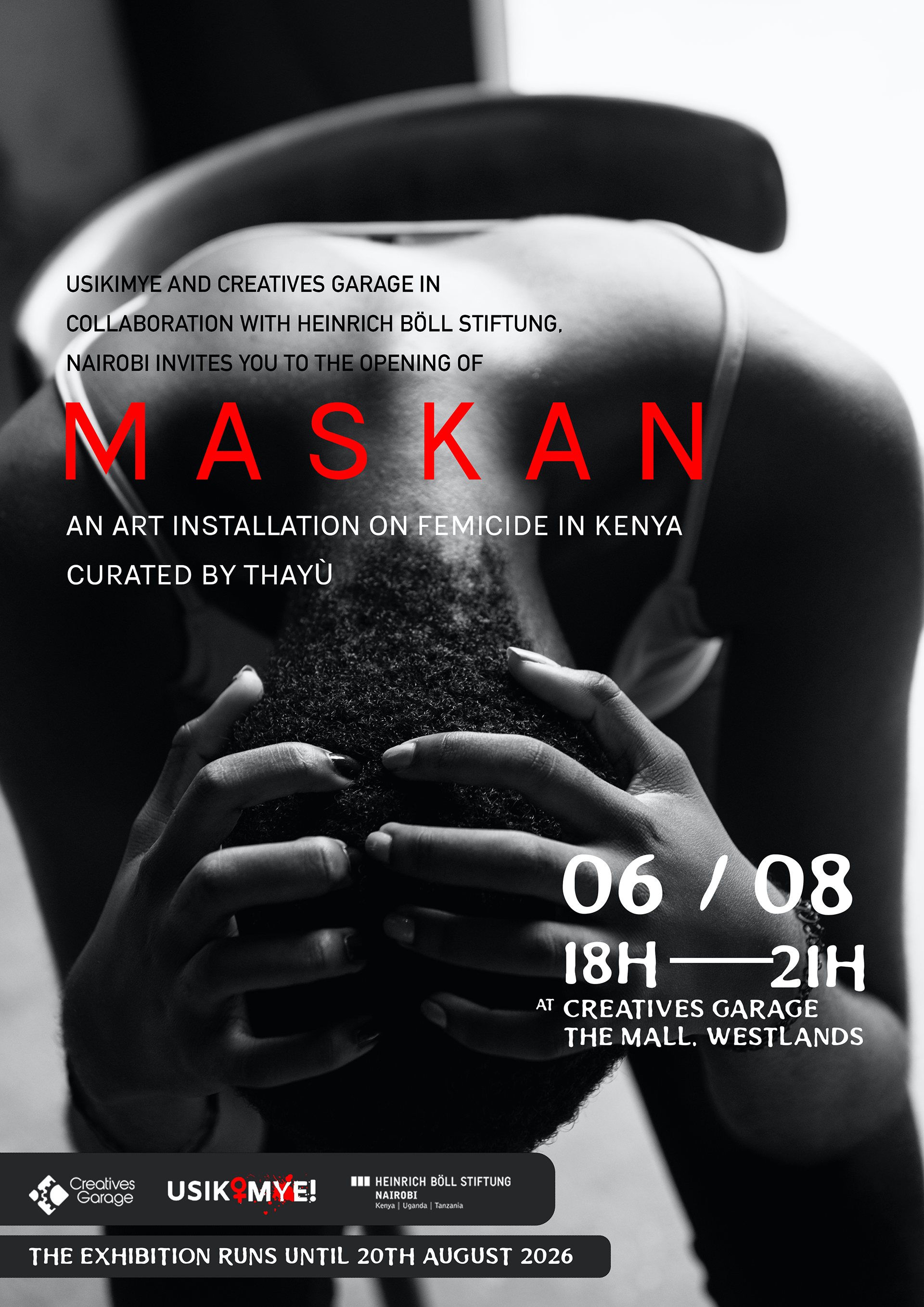
MASKAN II – Artist Statement
Today is 21st July 2026.
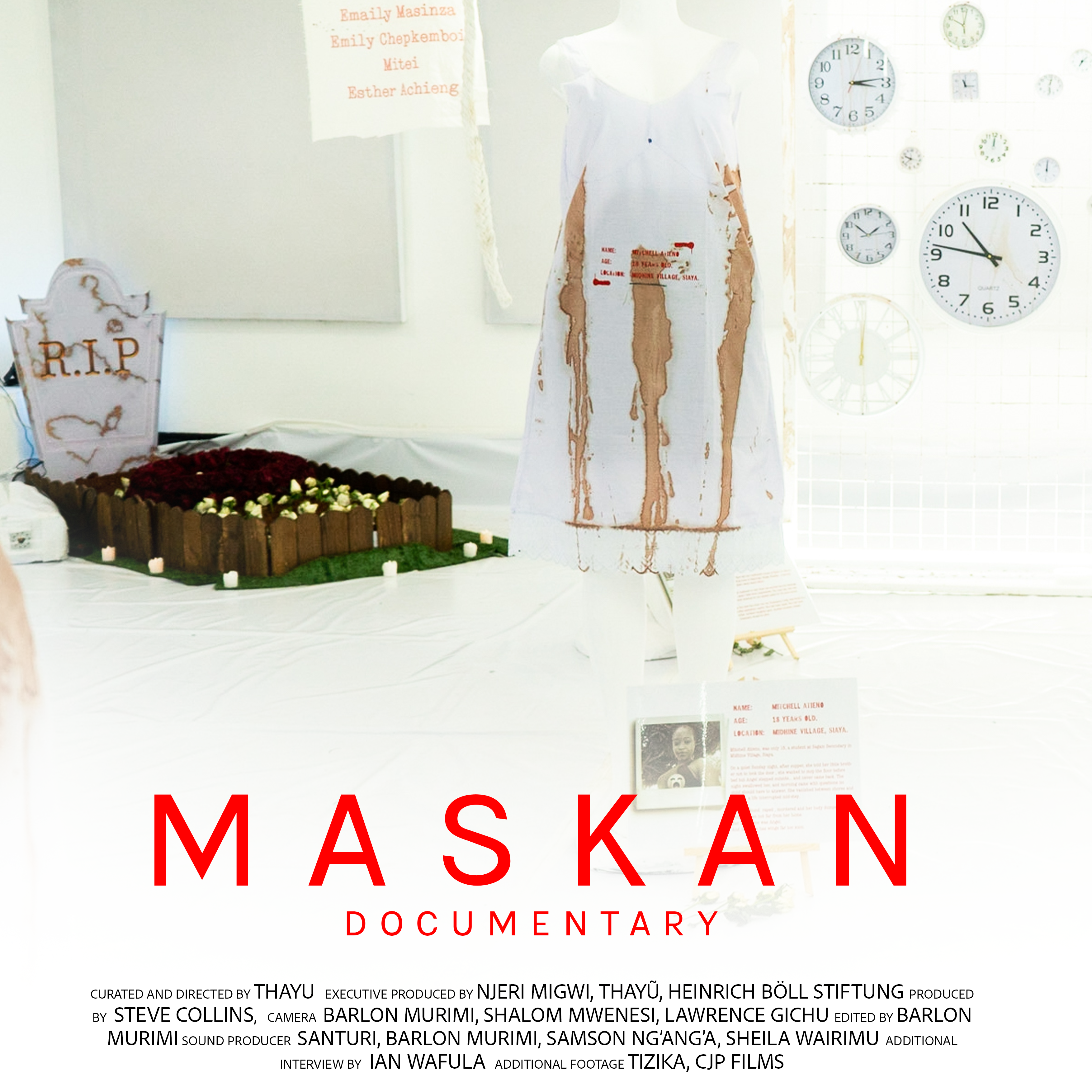
Yesterday we premiered the documentary we made about the first MASKAN exhibition.
Halfway through the screening, I wanted to leave.
Not because the film wasn't good (I mean, my badass team made it). I'd watched it countless times while editing. I knew every frame, every cut, every interview. But sitting in a cinema, surrounded by other people watching these stories unfold, I realised I hadn't actually processed everything we had lived through.
I just wanted to get up and walk out.
MASKAN began almost by accident. My friend Njeri came to me in 2025 with the idea of creating an exhibition on femicide. I said no. More than once. Eventually I said yes, mostly because 2025 somehow became my year of saying yes to things that scared me.
Wueh! I had no idea I was walking into one of the hardest journeys of my life. The plan was simple. Create something small, show it for one week, close and move on.
One week became three. Then another exhibition in Nairobi. Then another. Then we travelled to counties across Kenya carrying these stories with us. Somewhere along the way, MASKAN stopped being a project. It became something I carried home every evening.
People often ask what the hardest part was.
It wasn't building the installations.
It wasn't the long nights.
It wasn't even the logistics.
It was spending months immersed in stories of women and children whose lives ended far too soon. Reading case after case. Listening to families speak about people they loved in the past tense. Writing stories for people who could no longer tell their own. Recording sound. Editing interviews. Saying victims' names over and over until they stopped being statistics and became people I somehow felt I knew.
Every name belonged to someone.
Someone who laughed.
Someone who had plans for next week.
Someone who thought they were going home.
By the end of MASKAN in 2025, I had visited my therapist more times than I care to admit. I cried myself to sleep more nights than I would like to remember. It remains one of the most difficult things I have ever made.
I honestly thought that would be the end of it.
But MASKAN came back.
Because women are still being killed.
Children are still disappearing.
The stories haven't stopped, so neither could the work.
This year we've written a report on femicide, expanded the exhibition, created a feature-length documentary and made Maria, a short film about a woman who hides bruises beneath flawless makeup before walking into work every morning.
When I first wrote Maria, she felt like fiction.Then she stopped feeling fictional. I started seeing her everywhere. In restaurants. In offices. At supermarkets. Women smiling, working, laughing, carrying something unimaginable behind closed doors.
Making the short film Maria took something out of me.
There were days when I'd spend hours directing scenes of violence, drive home in complete silence, then open my phone only to find another headline about another woman who hadn't survived.
The work never really ended.
That's what people don't tell you about making work like this.
You don't leave it at the studio.
It comes home with you.
It sits beside you while you're having dinner.
It wakes you up at three in the morning.
It follows you into ordinary moments.
As I build MASKAN II, I've realised I'm still carrying 2025.
I find myself crying at unexpected moments. Breaking down over the smallest things. Feeling waves of anger that come from nowhere. Sometimes panic. Sometimes complete exhaustion.
And underneath all of it is one question that keeps repeating itself.
WHY?????
Why are women still being killed?
Why are children still disappearing?
What more could we have done?
What more can I do?
Sometimes I wonder whether art chooses us because MASKAN certainly chose me.
When I began, I thought I was creating an exhibition about femicide.
Instead, it became an exhibition about memory.
About unfinished futures.
About refusing to let people disappear twice; first through violence, then through forgetting.
Every installation in MASKAN II comes from that place. A wedding dress that never reaches its happy ending. An empty courtroom where justice never arrived. School uniforms waiting for children who will never wear them again. WhatsApp conversations that suddenly stop. Thousands of blank sheets representing lives interrupted. Names hanging above us, asking only one thing:
Please remember me.
I don't know if art changes the world. Some days, after reading another headline, I'm not sure it does but I do know this. Art can make us stop. It can make us look someone in the eye instead of looking away. It can make us remember a name instead of a number. And… maybe, just maybe, that's where change begins.